
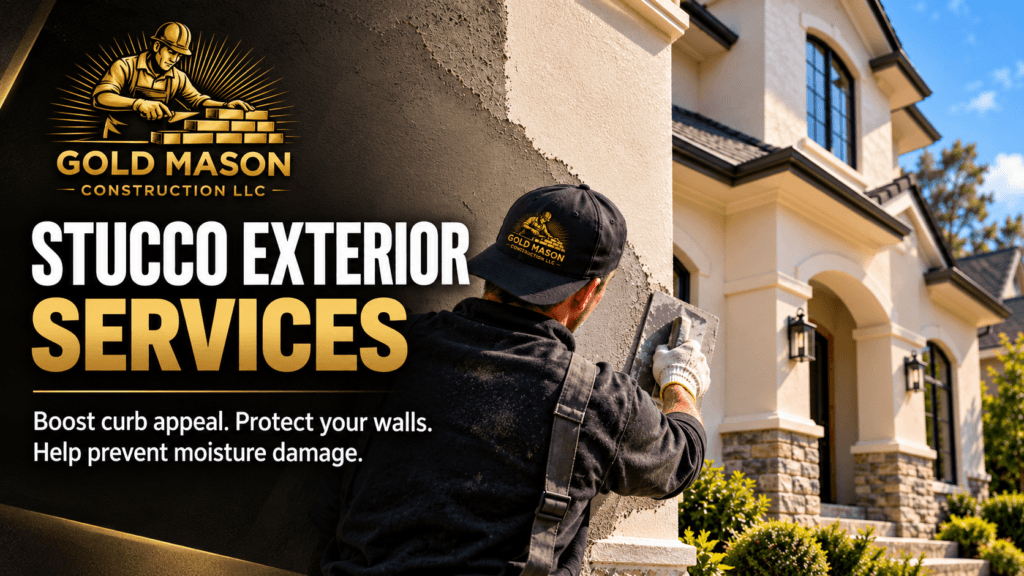
If the walls of your home look old, faded, cracked, or stained, your whole home looks like it needs some work. Stucco services can make your home look better and help keep your home’s walls safe from bad weather.
Homes in New Jersey deal with rain, snow, wind, sun, and cold winter days, these weather changes can slowly affect exterior walls. Gold Mason Construction LLC handles stucco repairs, finishes, and masonry support for homes all across North & Central New Jersey, including cities such as Garfield NJ.
Improve Your Home’s Exterior

Over time, constant exposure to rain, UV rays, and shifting weather can degrade your home’s exterior, leaving walls discolored, stained, or uneven. Resurfacing with a fresh stucco finish instantly elevates curb appeal by concealing worn areas under a smooth, modern texture. Whether your property requires targeted patching for minor surface wear or a complete exterior recoat to repair heavily damaged walls, stucco provides both lasting protection and a dramatic aesthetic upgrade.
Ways stucco can improve a home:
- Gives walls a cleaner look.
- Protects against the weather.
- Covers worn-out exterior surfaces.
- Adds curb appeal.
- Suitable for many home styles.
Protect Walls From Weather & Moisture
Stucco adds a durable, multi-layered shield to your home’s exterior, standing up to the harsh elements; from heavy rain and winter snow to high winds, relentless sun, and freezing temperatures. This weatherproofing is especially crucial for New Jersey homes, which face extreme seasonal shifts throughout the year. When properly installed and maintained, a high-quality stucco finish seals out moisture, maintains a clean and crisp curb appeal, and delivers long-lasting protection that keeps your home looking great for decades.
How Moisture Triggers Stucco Damage
Moisture almost always creeps in through tiny, unnoticed openings; a hairline crack, an unsealed gap around a window, or a compromised joint along the roofline. Initially, the damage remains hidden beneath the surface while the exterior appears completely normal. Over time, however, trapped water causes the material to deteriorate, leading to dark staining, soft spots, crumbling patches, or visible bulging. Catching and sealing a small entry point early is vastly easier and far less expensive, as compared to repairing widespread moisture damage later.
Why Post-Winter Inspections Are Essential
Winter freeze-thaw cycles subject stucco to intense thermal stress, often leaving behind hidden damage once the snow melts. A routine spring walkthrough allows you to catch emerging issues before they escalate. Pay close attention to high-risk zones, including window perimeters, wall corners, ground-level edges, and areas adjoining steps or walkways where ice and snow accumulate.
Streamlining Your Exterior Maintenance

While stucco is remarkably low-maintenance, it isn’t entirely self-sustaining. Conducting a quick inspection after winter storms, heavy rainfall, or severe winds helps protect your investment. Address minor surface cracks and discolored spots promptly; a tiny fissure can easily admit water, and a subtle stain is often the first warning sign of trapped moisture beneath the surface.
Stucco service may be needed if you notice:
- Cracks on the wall.
- Water stains.
- Loose or soft areas.
- Bulging spots.
- Faded finish.
- Uneven texture.
Frequently Asked Questions (FAQs)
How do professional stucco exterior services improve residential property value and curb appeal in Garfield, NJ?
Professional stucco exterior services transform dated, faded, or weathered house walls into smooth, modern, clean surfaces that significantly boost curb appeal and overall market value. Gold Mason Construction LLC provides expert stucco installation and repair in Garfield, applying durable finishes that cover old masonry, hide exterior flaws, and create a protective thermal barrier against tough weather.
Why is stucco an effective exterior wall material for handling New Jersey weather conditions?
Stucco creates a rigid, weather-resistant shell that effectively insulates homes against New Jersey’s seasonal climate shifts, including heavy rain, snow, high wind, and summer humidity. When properly installed and sealed, high-quality stucco shields underlying wood framing and sheathing from water intrusion, thermal expansion, and damaging freeze-thaw cycles.
What are the primary warning signs that exterior stucco requires immediate repair?
Key warning signs of failing stucco include fine hairline cracks, localized bulging or bubbling, dark water stains below windows, crumbling or soft surface areas, and chalky white mineral deposits known as efflorescence. Addressing these signs early prevents moisture from penetrating deep into the wall assembly where it can cause wood rot, structural framing decay, and toxic mold.
Why should New Jersey homeowners perform an exterior stucco inspection after winter?
Winter weather brings freezing temperatures and snow accumulation that can trap water inside microscopic stucco cracks, causing the trapped ice to expand and widen the damage. Inspecting your exterior walls every spring particularly around window sills, rooflines, wall corners, and ground-level foundation edges, allows homeowners to catch moisture intrusion early before spring rains exacerbate hidden wall decay.
What routine maintenance is required to keep exterior stucco walls in optimal condition?
Stucco requires low overall maintenance, primarily consisting of periodic gentle washing with low-pressure water and mild detergent to remove surface dirt, moss, and airborne pollutants. Homeowners should avoid high-pressure power washing, which can strip protective finishes, and routinely inspect sealant around windows, doors, and exterior penetrations to ensure watertight integrity.
Can damaged exterior stucco be repaired locally, or does the entire wall need full replacement?
Isolated surface cracks, localized chipping, and minor impact damage can typically be repaired using specialized color-matched stucco patching compounds and flexible elastomeric caulking without replacing the whole wall. However, if moisture has compromised the lath wire, degraded structural sheathing, or caused widespread delamination, full remediation of the affected wall section is required.
What causes hairline cracks to form on exterior stucco walls?
Hairline stucco cracks usually stem from natural house settling, ground vibrations, minor thermal expansion and contraction, or improper initial curing of the cement mixture. While small hairline cracks are common, they must be sealed promptly with breathable, flexible exterior masonry sealants to prevent rain and freezing temperatures from widening the fissures.
What causes dark water stains or discoloration on exterior stucco surfaces?
Dark stains on stucco indicate improper water runoff or moisture trapping, often caused by clogged gutters, missing kick-out flashing, or deteriorating window sealant. Persistent moisture absorption creates ideal conditions for mold, mildew, and algae growth, signaling that water is penetrating the outer finish and requires professional drainage evaluation.
Should exterior stucco walls be painted or sealed to prevent moisture damage?
Applying a high-quality, breathable masonry sealer or 100% acrylic elastomeric paint adds a waterproof membrane while allowing internal moisture vapor to escape freely. Sealing stucco prevents water absorption during heavy storms, protects the color finish from ultraviolet fading, and makes the wall surface significantly easier to clean.
What is the difference between traditional hard-coat stucco and synthetic EIFS stucco?
Traditional hard-coat stucco consists of Portland cement, sand, lime, and water applied over metal lath, creating a thick, rock-hard impact-resistant shell. Exterior Insulation and Finish Systems, or synthetic stucco, utilize lightweight foam insulation boards layered with fiberglass mesh and synthetic acrylic finishes, offering higher thermal insulation value but requiring meticulous moisture management detailing.
Why is an exterior stucco wall bulging or soft to the touch in certain spots?
A bulging or soft stucco wall indicates that water has seeped behind the cement finish, causing the wooden sheathing to swell or the underlying metal lath to rust and detach from the framing. This structural separation, known as delamination, poses a risk of falling stucco sections and requires immediate professional repair to restore wall stability and replace rotted underlying materials.
What factors influence the overall cost of home stucco repairs in North Jersey?
Stucco repair costs depend on the square footage of damaged area, accessibility and scaffolding requirements, severity of underlying water rot, specialized texture matching, and the type of finish coat applied. Minor crack sealing is relatively inexpensive, whereas comprehensive moisture remediation involving sheathing replacement requires higher labor and material investment.
How long does a properly installed and maintained stucco exterior last on a home?
A professionally installed and properly maintained traditional stucco exterior can easily last 50 to 100 years or more on a residential home. Achieving maximum lifespan depends on maintaining watertight sealants around windows and rooflines, applying breathable protective coatings, and repairing small surface cracks before freeze-thaw cycles cause structural degradation.
Why is improper flashing around windows and doors dangerous for stucco homes?
Window and door flashings direct rainwater away from wall openings; when flashing is missing, improperly installed, or unsealed water channels directly behind the stucco layer. Because trapped moisture cannot evaporate quickly behind cement walls, it silently rots wooden studs, destroys interior drywall, and weakens structural masonry over time.
What is the white powdery substance appearing on my exterior stucco walls?
The chalky white residue on stucco is efflorescence, caused by water dissolving internal mineral salts inside the cement and depositing them on the surface as the water evaporates. While efflorescence itself is harmless to touch, its presence proves that moisture is moving through the wall assembly, highlighting the need to identify and eliminate the water source.
Why is the transition area between stucco walls and concrete foundations vulnerable to damage?
The junction where stucco meets a concrete foundation is highly vulnerable because ground moisture, melting snow banks, and rain splash-back constantly saturate the lower wall edge. If the stucco is installed too close to ground grade or lacks a proper weep screed, moisture wicks upward into the wall, causing lower-edge crumbling, mold, and rot.
Can new stucco patching be seamlessly matched to existing faded exterior walls?
Experienced stucco contractors match existing finishes by analyzing the original aggregate texture, grain size, and color pigments, often taking field samples to blend custom cement coats. To eliminate subtle shading variations caused by sun fading on older walls, contractors frequently apply a fresh breathable fog coat or elastomeric masonry paint over the entire wall section.
Does installing or repairing exterior stucco help lower home heating and cooling energy bills?
Stucco adds a dense, continuous layer of thermal mass to a home’s exterior envelope, reducing air infiltration and slowing thermal transfer through walls. By eliminating drafty cracks and incorporating modern rigid insulation layers under the finish, stucco maintains stable indoor temperatures, reducing furnace and air conditioning energy demand throughout New Jersey’s summer and winter seasons.
What is the ideal weather and temperature range for applying or repairing exterior stucco?
Stucco application and repair require ambient temperatures consistently between 40 and 90 degrees Fahrenheit with moderate humidity to ensure proper cement hydration and curing. Spring, summer, and early autumn are optimal seasons in New Jersey for stucco work, as freezing winter temperatures can ruin wet cement before it cures, leading to weak, crumbly walls.
What is the difference between residential home stucco services and commercial building stucco work?
Commercial stucco projects involve larger surface areas, strict fire-resistance compliance, multi-story scaffolding setups, and integration with heavy-duty commercial window and storefront flashing systems. Residential stucco focuses on architectural detailing, custom color and texture matching, residential window weatherproofing, and preserving single-family curb appeal and structural integrity.
Call Us for Top-Rated Stucco Exterior Services in New Jersey Today!
Stucco problems often start small, but they can get worse when water keeps reaching weak areas of the wall; good stucco work can help with both. If your stucco is showing signs of damage, contact Gold Mason Construction LLC for stucco exterior services in Garfield NJ.